Compare steel furniture with wooden and plastic furniture. Learn why steel furniture offers better durability, hygiene, safety, and long-term value for offices, labs, hospitals, and industrial use.
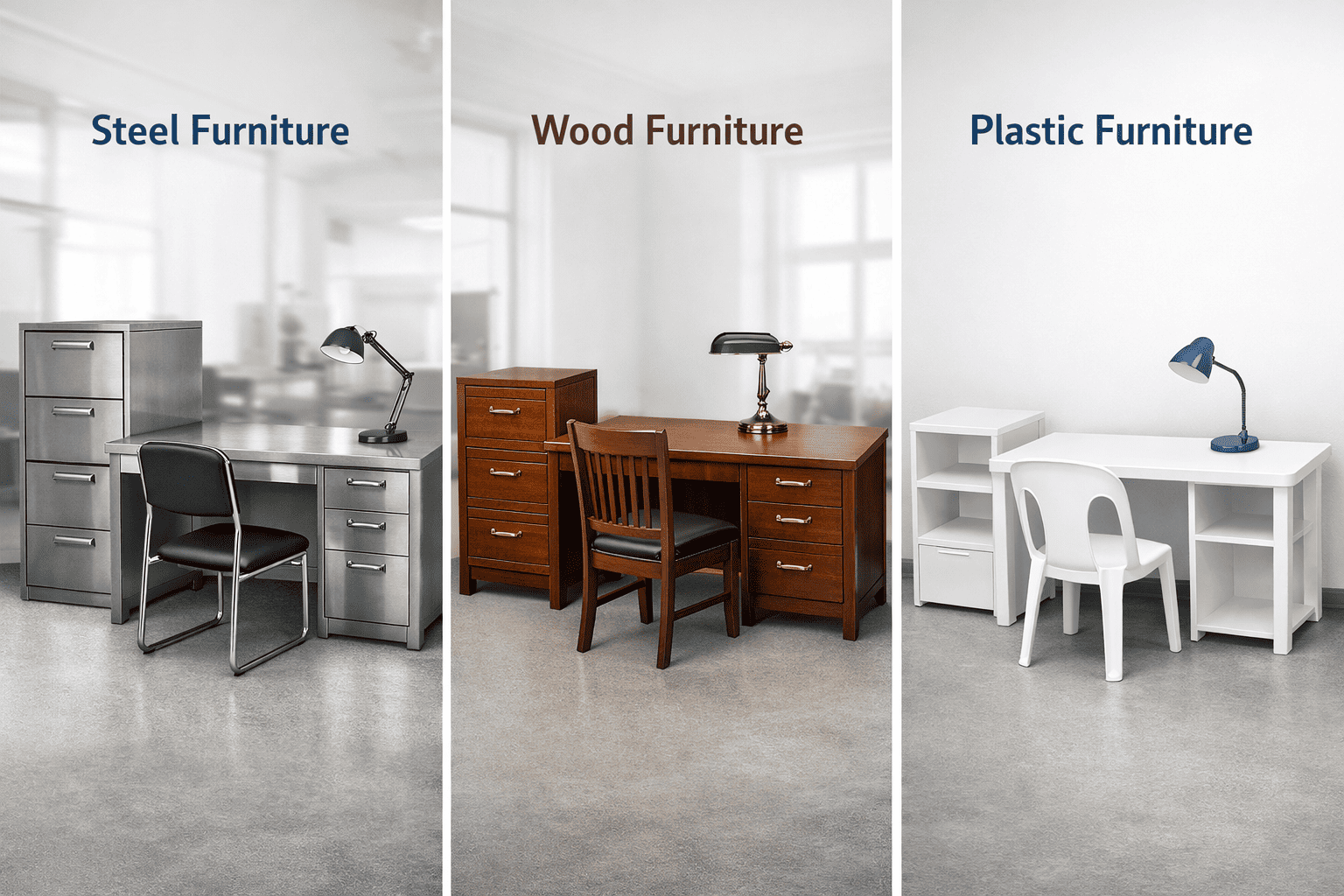
Choosing the right furniture is an important decision for homes, offices, laboratories, hospitals, and industrial spaces. Today, buyers usually compare three popular options: steel furniture, wooden furniture, and plastic furniture. Each material has its own advantages, but steel furniture stands out in many practical situations.
In this blog, we will compare steel furniture with wooden and plastic furniture and explain when steel makes more sense in terms of durability, safety, maintenance, cost, and long-term value.
Durability: Steel Clearly Wins
One of the biggest advantages of steel furniture is its strength and durability.
- Steel furniture can easily last 15–25 years or more with minimal damage.
- It can handle heavy loads without bending or breaking.
- It is resistant to impact, pressure, and daily wear.
Wooden furniture:
- Can crack, warp, or weaken over time.
- Is affected by moisture, termites, and temperature changes.
Plastic furniture:
- Cracks easily under heavy weight.
- Loses shape and strength over time.
- Becomes brittle when exposed to heat or sunlight.
When durability matters, steel makes more sense.
Maintenance & Cleaning: Steel Is Low Effort
Steel furniture requires very little maintenance.
- Easy to clean with a cloth and mild cleaner
- No polishing, painting, or special treatment required
- Resistant to stains, chemicals, and spills
Wooden furniture:
- Needs regular polishing
- Can stain easily
- Requires protection from water and humidity
Plastic furniture:
- Easy to clean initially
- Gets scratched and faded quickly
- Looks old and dull within a few years
In places like laboratories, hospitals, and offices, low maintenance is critical—making steel furniture the smarter choice.
Hygiene & Safety: Steel Is the Most Hygienic
Hygiene is a major concern in medical, laboratory, and food-related environments.
Steel furniture:
- Has a non-porous surface
- Does not absorb moisture, bacteria, or chemicals
- Easy to disinfect and sanitize
Wooden furniture:
- Absorbs moisture
- Can hold bacteria and germs
- Not suitable for sterile environments
Plastic furniture:
- Can crack, allowing dirt and germs to settle
- May react with strong cleaning chemicals
That’s why hospitals, labs, and cleanrooms prefer steel furniture.
Fire & Heat Resistance: Steel Is Safer
Steel furniture offers better fire safety.
- Steel does not catch fire
- It can withstand high temperatures
- Suitable for industrial and electrical areas
Wooden furniture:
- Highly flammable
- Can increase fire risk
Plastic furniture:
- Melts at high temperatures
- Releases toxic fumes when burned
In environments where safety is a priority, steel furniture makes more sense.
Load Capacity & Strength
Steel furniture is designed to carry heavy loads.
- Ideal for storage racks, cabinets, worktables, and lockers
- Maintains shape even under constant weight
Wooden furniture:
- Can bend or break under heavy load
- Joints weaken over time
Plastic furniture:
- Not designed for heavy-duty use
- Can collapse suddenly
For industrial, warehouse, or office storage needs, steel furniture is the most reliable option.
Cost vs Long-Term Value
At first glance, steel furniture may seem more expensive. However, when you consider long-term value, steel is often the most economical option.
Steel furniture:
- Higher initial cost
- Very long lifespan
- Minimal repair or replacement cost
Wooden furniture:
- Moderate to high cost
- Needs repairs, polishing, and replacements
Plastic furniture:
- Low initial cost
- Short lifespan
- Frequent replacements increase overall cost
Over time, steel furniture proves to be a cost-effective investment.
Environmental Impact & Sustainability
Steel furniture is also more eco-friendly in the long run.
- Steel is 100% recyclable
- Old steel furniture can be reused or melted down
- Less waste compared to plastic
Wooden furniture:
- Leads to tree cutting
- Not always sustainable
Plastic furniture:
- Non-biodegradable
- Major contributor to environmental pollution
For businesses aiming for sustainability, steel furniture is a responsible choice.
Design & Customization Options
Modern steel furniture is no longer boring or industrial-looking.
- Available in multiple colors and finishes
- Powder-coated options improve appearance
- Can be customized for specific needs
Wooden furniture offers natural beauty, but customization is often expensive.
Plastic furniture often lacks design flexibility and appears less professional in formal settings.
Today, steel furniture combines functionality with modern design.
Where Steel Furniture Makes the Most Sense
Steel furniture is the best choice for:
- Offices and corporate spaces
- Laboratories and research centers
- Hospitals and clinics
- Industrial and factory environments
- Warehouses and storage areas
- Schools and institutions
In these environments, strength, hygiene, safety, and longevity matter more than decorative appearance.
Final Thoughts
While wooden and plastic furniture have their own uses, steel furniture stands out when practicality is the priority. It offers unmatched durability, low maintenance, better safety, and excellent long-term value. If you are looking for furniture that can handle heavy use, stay hygienic, and last for years, steel furniture clearly makes more sense. Choosing steel is not just a purchase, it’s a long-term investment in quality and reliability.