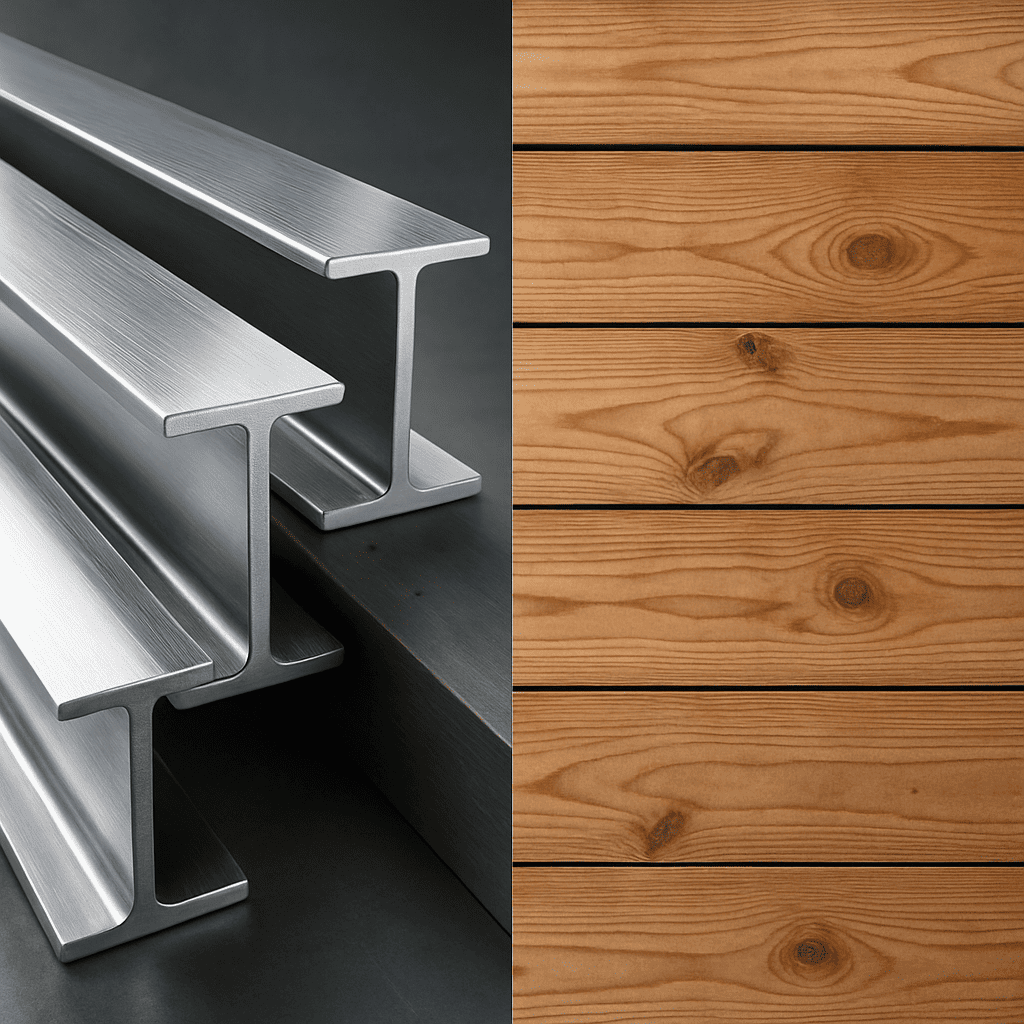
Choosing the right material can define the success and longevity of your project. Our latest blog breaks down Steel vs Wood across cost, durability, maintenance & long-term value. Highly useful for architects, industries, builders, and designers.
When it comes to selecting the right material for construction, furniture, interior projects, industrial setups, or architectural design, steel and wood are two of the most frequently compared options. Both materials have their own advantages, limitations, and areas of best use. However, choosing one over the other requires a clear understanding of cost, longevity, performance, maintenance demands, and long-term value.
If you are planning to build a structure, renovate your workspace, design furniture, or invest in long-lasting infrastructure, this guide will help you understand how steel and wood differ. Let’s break down the comparison based on the most important factors: cost, durability, lifespan, maintenance, aesthetics, environmental impact, and long-term performance.
1. Cost Comparison: Steel vs Wood
Cost is often the first deciding factor, especially for large-scale projects. Wood is generally cheaper upfront, particularly when using softwood for furniture or basic construction work. Hardwoods like teak, oak, and walnut are more expensive but still often cost less than high-grade steel.
Initial Cost
| Material | Initial Cost | Cost Influence Factors |
|---|---|---|
| Wood | Lower to Moderate | Type of wood, rarity, thickness, finishing |
| Steel | Higher Initially | Grade of steel, fabrication process, and shaping |
Wood is often considered the budget-friendly option for homes and residential furniture. However, the long-term cost may increase due to repairs, polishing, termite treatment, and moisture damage.
Steel, on the other hand, may cost more at the beginning, but it offers better value over time. Its durability and minimal maintenance requirements often reduce replacement and repair costs drastically.
Verdict on Cost:
- Short-term economy: Wood wins.
- Long-term value: Steel is more cost-effective.
2. Durability & Strength Comparison
In terms of structural strength and performance, steel is significantly more durable than wood. It can withstand heavy loads, extreme weather, corrosion-resistant grades offer long life, and it doesn’t warp or crack like wood.
Durability Parameters
| Factor | Wood | Steel |
|---|---|---|
| Strength | Good, but varies by type | High tensile and load-bearing strength |
| Moisture resistance | Low without treatment | High with proper coating |
| Pest & termite resistance | Very low | Excellent |
| Fire safety | Highly flammable | Fire-resistant |
Wood reacts to environmental changes; it expands in humidity, shrinks in heat, and may crack over time. Steel, however, maintains shape and integrity for decades. This is why it is widely used in industrial facilities, hospitals, laboratories, warehouses, and commercial buildings.
Verdict on Durability:
- Steel stands out as the more durable, reliable, and long-lasting material.
3. Maintenance Requirements
One of the biggest differences between steel and wood lies in how much maintenance they require over time.
Wood Maintenance
Wood needs regular care, including:
- Polishing or varnishing
- Termite and pest treatment
- Protection from moisture and rot
- Periodic repairs if cracking occurs
Without proper maintenance, wood can weaken quickly, especially in humid or coastal environments.
Steel Maintenance
Steel offers low maintenance, requiring minimal care, such as:
- Occasional anti-rust coating (for non-stainless varieties)
- Basic cleaning
- Rare structural repair
Stainless steel, powder-coated steel, and reinforced steel require nearly no maintenance and are highly resistant to environmental conditions.
Verdict on Maintenance:
- Steel clearly requires less maintenance than wood.
- Wood demands ongoing expenses to maintain longevity.
4. Visual Appeal & Aesthetic Flexibility
A major reason many people still prefer wood is its natural look and warm appeal. Wood offers visual richness through grains, textures, and colors that steel cannot naturally replicate.
Steel, however, has grown in popularity due to modern, industrial, and minimalistic aesthetics. With laser cutting, powder coating, polishing, and custom fabrication, steel can be designed elegantly for both industrial and luxury spaces.
Where Aesthetics Lead
- Wood is ideal for interiors, furniture, and decor that require warmth and a natural feel.
- Steel suits modern architecture, industrial setups, commercial environments, and sleek design styles.
5. Environmental Impact
Sustainable material use is also an important factor today. While wood is considered natural and renewable, deforestation is a rising concern. Responsible sourcing is essential.
Steel production involves high energy consumption, but steel is 100% recyclable, making it a sustainable long-term material. Most structures today use recycled or repurposed steel, contributing to eco-friendly development.
Eco Verdict:
- Wood is natural, but sustainability depends on responsible harvesting.
- Steel is recyclable and reusable indefinitely.
6. Best Use Scenarios: Where Each Material Performs Best
Where Wood Works Best
✔ Home and interior décor
✔ Classic or vintage furniture
✔ Spaces requiring natural aesthetics
✔ Lightweight construction
Where Steel is More Suitable
✔ Industrial and commercial infrastructure
✔ Heavy-duty furniture and workstations
✔ Hospitals, laboratories, cleanrooms
✔ Outdoor installations exposed to weather
✔ Modern architecture and high-strength structures
With growing demand for long-life and low-maintenance materials, steel is increasingly replacing wood in workplaces, labs, hospitals, and infrastructure segments.
Final Conclusion: Which Material Should You Choose?
Choosing between steel and wood depends on your project goals. If appearance and warmth are your priority, wood is a beautiful choice but requires maintenance and care. If you want strength, longevity, and low maintenance, steel clearly stands as the winner.
Final Decision Breakdown
| Category | Winner |
|---|---|
| Cost (Initial) | Wood |
| Cost (Lifetime Value) | Steel |
| Durability | Steel |
| Maintenance | Steel |
| Aesthetics | Wood (Natural), Steel (Modern) |
| Sustainability | Steel (Recyclable), Wood (Renewable with control) |
In today’s fast-growing industrial and commercial world, steel is preferred for long-term performance, while wood remains a top choice for designing warm, natural-looking spaces. Both materials have their place; the right one depends on how you plan to use it.